A snap button usually falls off because the fastener, fabric stack and setting process do not match. Check post or prong length, reinforcement, hole size, component compatibility, die alignment, setting pressure and opening force. Replacing the snap without correcting the cause often repeats the failure.
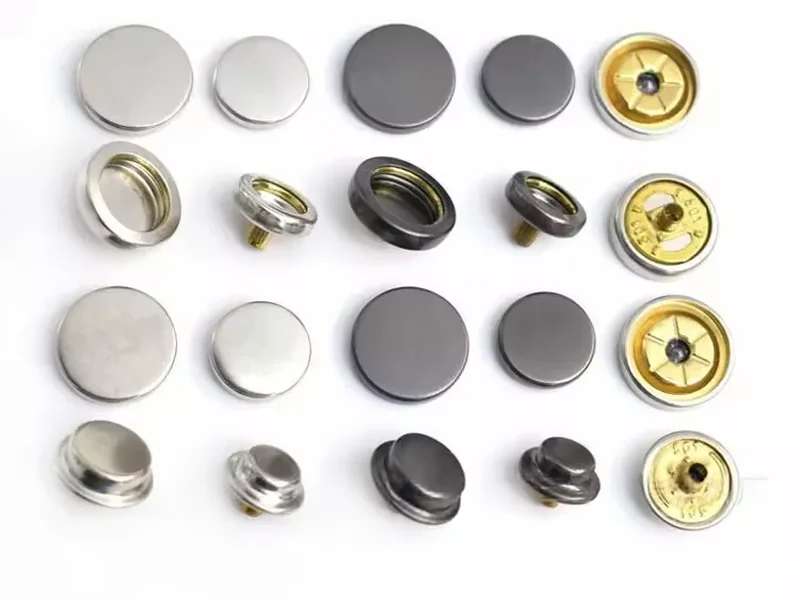
Quick diagnosis: match the symptom to the likely cause
| What you see | Likely cause | Check first |
|---|---|---|
| Snap pulls out with fabric attached | Fabric is too weak or the load is too concentrated | Reinforcement, edge distance and opening force |
| Cap or socket spins | Incomplete clinch or post too long | Set cross-section, post length and die travel |
| Post comes through the socket | Wrong post length, setter or component sequence | Matched component drawing and die set |
| Cap dents or tilts | Off-center die, unstable base or excess pressure | Die profile, alignment and machine setting |
| Snap closes but opens during wear | Closure type is too light or garment tension is too high | Fit, overlap and required opening force |
| Failure appears after washing | Material, finish or attachment changed during processing | Wash recipe and post-wash pull check |
The seven causes buyers should control
1. The post or prong length does not match the fabric stack
A short post may not roll or clinch fully. A long post can buckle, pierce the mating part or leave the snap loose. Measure the complete stack at the attachment point, including shell fabric, lining, interlining, tape and reinforcement.
2. The attachment hole is too large
A pre-punched hole should locate the component without removing more material than necessary. If the hole is oversized or becomes enlarged during removal, the new snap has less fabric to hold.
3. The fabric needs reinforcement
Light jersey, stretch fabric and loosely woven material can distort when the wearer opens the snap. A stable patch, woven reinforcement or snap tape may spread the load, but it also changes the total thickness. Re-select the post after adding reinforcement.
4. Parts from different snap systems were mixed
Caps, sockets, studs and posts can look similar while using different internal profiles. Order the four components as one matched system and keep lot labels at the setting station.
5. The die or setting pressure is wrong
A matched top and bottom die supports the decorative surfaces while forming the internal post. Check alignment on scrap material before setting the garment. A hard hit cannot compensate for an incorrect die profile.
6. The closure force is too high for the application
A stronger snap is not automatically safer. If opening the fastener pulls the fabric harder than the attachment area can tolerate, the cloth fails first. Compare spring, ring and prong constructions on the actual garment.
7. The material or finish was not checked after garment processing
Washing, finishing chemicals, abrasion and heat can affect both appearance and attachment. Approve the hardware on a finished garment sample and repeat the buyer's required tests before bulk release.
Need to match a snap to your fabric? Send a garment photo, total fabric-stack thickness, required size, quantity and setting-machine details.
Compare snap fastener typesWhich snap construction is the better starting point?
| Construction | Common starting use | Key validation point |
|---|---|---|
| Prong or open-ring snap | Light garments, knitwear and babywear programs | Prong clinch and load distribution on the actual fabric |
| Spring snap | Shirts, jackets and general apparel | Opening force, cap support and post length |
| Ring snap | Outerwear, workwear and bags | Retention force versus fabric strength |
| Sew-on snap or snap tape | Repairs, soft fabrics or constructions that avoid punched holes | Stitch support, placement and visible bulk |
How to repair a snap that has already pulled out
- Stop using the damaged closure. Continued opening can enlarge the hole.
- Remove the failed hardware carefully. Set-in parts are normally replaced rather than reused. If removal risks cutting the garment, use a repair professional.
- Restore the attachment area. Patch or reinforce torn fabric so the replacement is not set into the same weakened hole.
- Recheck the total thickness. The repaired stack may require a different post length.
- Set a complete matched snap. Use the correct die or setting tool and test operation without pulling on the surrounding fabric.
A repair can restore one garment, but a recurring factory failure needs a controlled setting trial, documented component set and inspection standard.
Bulk-production approval checklist
When several garments fail, collect one evidence pack before changing pressure or replacing parts. The record should make the component, fabric and setting variables comparable across the buyer, trim supplier and garment factory.
| Evidence group | What to capture | Decision it supports |
|---|---|---|
| Component identity | Cap, socket, stud and post codes; size, material, finish and lot reference | Confirms whether all four parts belong to the approved snap system |
| Fabric stack | Shell, lining, reinforcement and total finished thickness at the setting point | Supports the post or prong option and reinforcement choice |
| Setting setup | Press type, die references, machine setting and a set cross-section photo | Separates alignment or clinch problems from component mismatch |
| Garment use | Application, opening direction, wash process and buyer-required checks | Tests whether closure force and finish suit the actual garment |
| Failed sample | Front, back and loose-part photos with garment and production lot | Preserves evidence before removal changes the failure surface |
- Use the exact production shell, lining, reinforcement and wash process for the trial.
- Record the snap family, diameter, finish, component codes and post or prong option.
- Approve a physical sample board and a finished garment, not a cap photo alone.
- Confirm the setting machine and matched die references with the garment factory.
- Inspect for rotation, tilt, dents, incomplete clinch and fabric damage.
- Apply the buyer's required attachment, wash and corrosion tests before bulk release.
Frequently asked questions
Why do snap buttons keep falling off fabric?
Common causes are an unsuitable post or prong length, a hole that is too large, insufficient reinforcement, mismatched dies, off-center setting or a closure whose opening force is too high for the fabric.
Do snap fasteners need interfacing?
Lightweight, knitted or stretchy fabrics often need a stable reinforcement layer or a construction that spreads the load. Test the exact fabric stack because reinforcement changes the thickness the snap must grip.
Can a removed snap button be reused?
Set-in snap components deform during installation and removal, so reusing them is unreliable. Replace the affected components and confirm that every part belongs to the same snap system.
Why does the snap post come through the socket?
The post may be too long for the fabric stack, the setter may be incorrect, or the parts may be misassembled. Stop and compare the component set, post length and matched die before continuing.
What should a buyer send for a snap-button recommendation?
Send the finished garment application, fabric composition and total thickness, snap type and diameter, cap finish, target quantity, destination market, wash process and available setting equipment.
Turn a failure photo into a usable snap specification
Mark the failed part, include the fabric stack and tell us how the garment is processed and used.
Request a snap recommendation