Choose corozo when you need a plant-derived button, coordinated size runs and a dyed color close to a target shade; choose genuine horn when natural black, brown or tortoise variation is part of the garment design. Neither material is automatically “better.” The right decision depends on the fabric, care process, color tolerance, branding method and the variation your collection can accept.
Corozo vs horn buttons at a glance
| Buyer question | Corozo / tagua | Genuine horn |
|---|---|---|
| Material origin | Hard seed material from Phytelephas palms; often called vegetable ivory | Animal-derived horn; species and supply-chain description should be declared by the supplier |
| Visual character | Fine natural grain; can be natural, dyed, polished or given burnt-edge effects | Piece-to-piece marbling, translucency and shade variation in natural color families |
| Color control | Better starting point for dyed-to-match programs and coordinated color ranges | Batch-grade to an approved natural shade range; do not expect every piece to be identical |
| Typical garment fit | Shirts, chinos, knitwear, casual jackets and color-led collections | Suits, blazers, coats, heritage knitwear and premium outerwear |
| Logo development | Laser, debossed or engraved effects can be sampled; contrast depends on color and finish | Simple engraving can work, but natural pattern and limited contrast must be reviewed on samples |
| Approval priority | Shade, grain, finish and size-set consistency | Accepted variation range, thickness, shade family and matched front/sleeve sets |
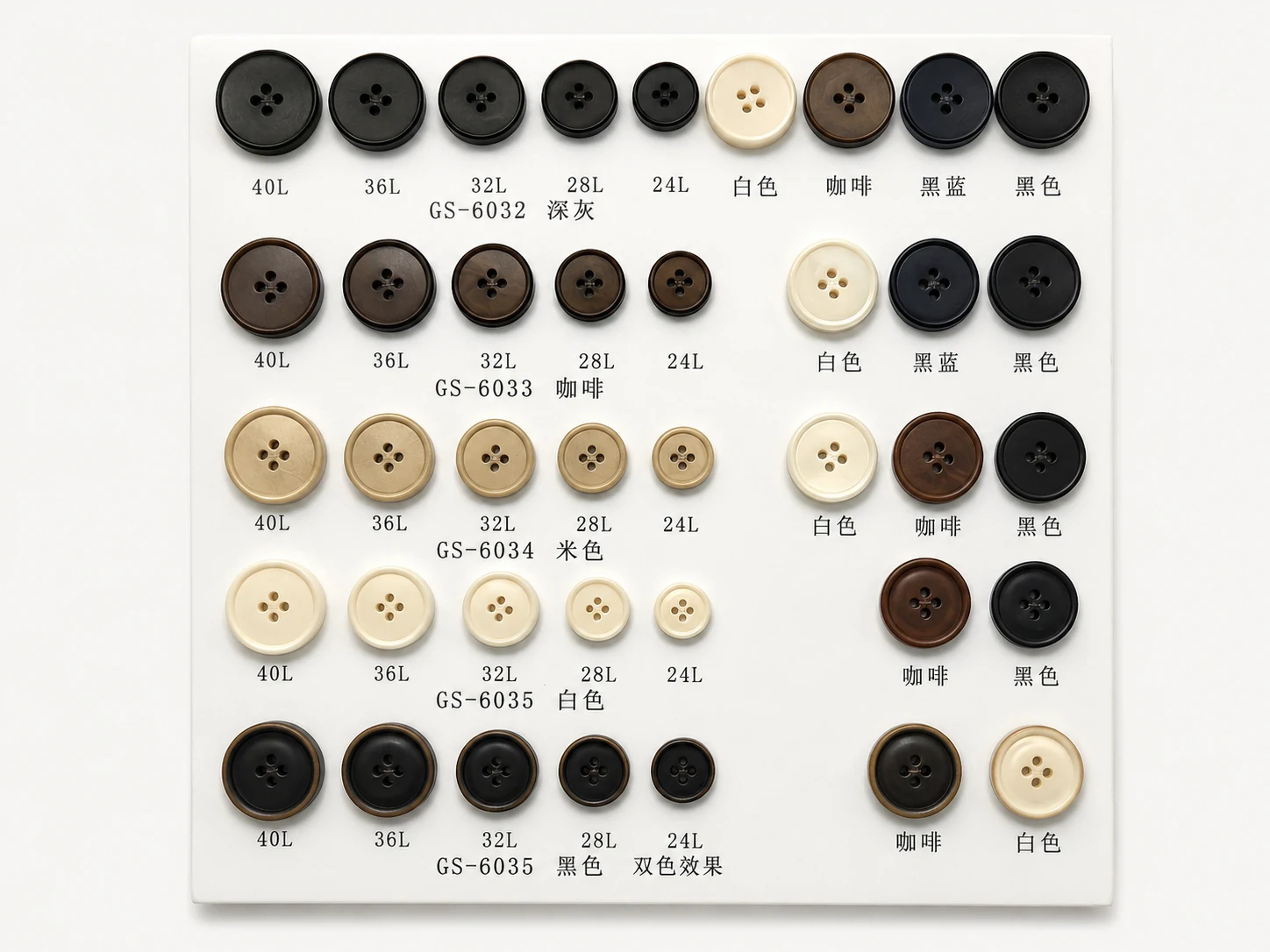
What are corozo buttons?
Corozo is the trade name commonly used for tagua button material. The Food and Agriculture Organization of the United Nations identifies tagua palm nuts from northern South America as a source of vegetable ivory used for buttons. After the seed material is dried and prepared, button blanks can be turned, drilled, shaped, dyed and polished.
For a clothing brand, corozo's practical advantage is not a vague “eco” label. It is the combination of a recognizable natural grain with more color flexibility than untreated horn. A supplier can organize sample boards by style, size and shade, making corozo useful when the design team wants a natural material across several garments or colorways.
What are genuine horn buttons?
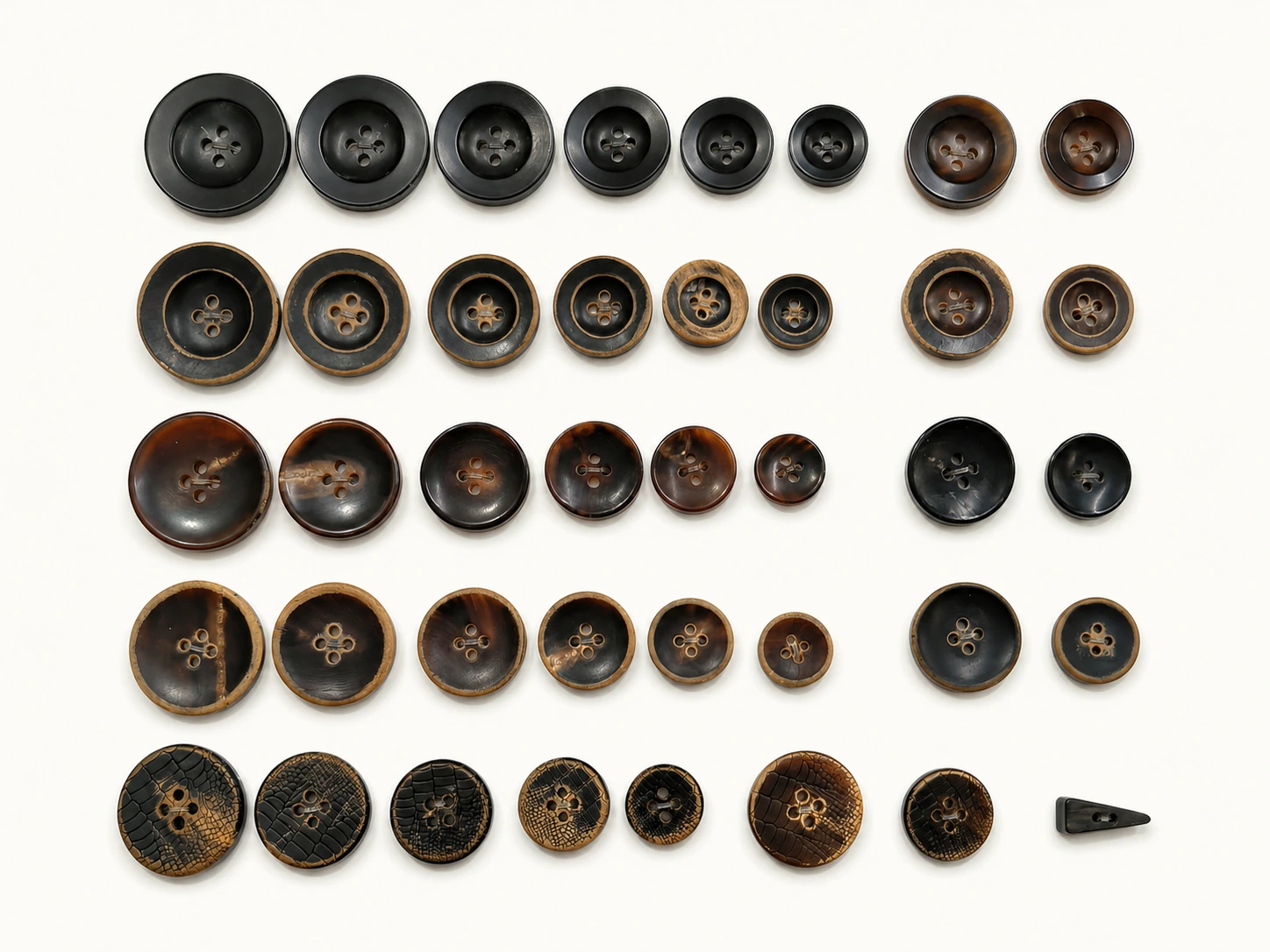
Genuine horn buttons are cut and formed from animal horn. They should not be confused with imitation-horn polyester or resin buttons, which can copy the visual pattern while offering different material, uniformity and price characteristics. Put “genuine horn” or “imitation horn resin” directly in the specification so the quote and approval sample refer to the same product.
Horn is selected for its natural variation rather than perfect repetition. A button set can include black, coffee, smoky, cream or tortoise tones, with each piece showing a different streak or translucent area. The buyer's job is to define how much variation is acceptable, not to approve one attractive button and assume the entire lot will look identical.
Choose by the garment, not by the material name
Premium shirts and color-led collections
Corozo is usually the more controllable starting point when several shirt colorways need 16L, 18L or 20L buttons in coordinated shades. Request a lab dip or physical shade sample on the actual button material. A textile Pantone reference is useful communication, but the approved button—not a screen image—should be the production standard.
Suits, blazers and coordinated size sets
Horn can give tailoring a distinctive natural surface, especially in dark, smoky or tortoise families. Approve jacket-front and sleeve sizes together because grain scale, thickness and edge profile can look different across a size run. Corozo remains a valid alternative where the brand needs a tighter color family or a plant-derived material.
Coats, heritage knitwear and statement outerwear
Large horn buttons suit designs that intentionally show natural pattern variation. Large corozo buttons offer more color choices and can carry engraved or burnt-edge effects. For either material, confirm button weight, buttonhole clearance, edge radius and the strength of the sewn attachment on the finished garment.
Uniform and repeat programs
Repeat orders need reference control. Keep the approved material, style number, size, thickness, shade sample, finish and tolerance notes. Natural materials will still vary, but a documented range prevents the next order from being judged against memory or a compressed photo.
Size and construction starting points
| Application | Starting size range | Approval note |
|---|---|---|
| Shirt front and cuff | 16L–20L | Check buttonhole clearance, edge comfort and shade under the garment's intended light |
| Knitwear and casual jacket | 24L–36L | Confirm shank or sew-through construction, fabric support and finished weight |
| Suit or blazer front | 40L–44L | Approve the full front-and-sleeve set, not one size alone |
| Coat or statement closure | 40L–54L | Test buttonhole opening, edge profile and attachment on the actual fabric stack |
These are sourcing starting points, not universal rules. Convert ligne to millimetres and confirm the final size with a garment sample using our button size chart.
How to control color and natural variation
- Define the material honestly. State corozo, genuine horn or imitation horn resin. Do not let “natural look” substitute for material identity.
- Approve a range. For corozo, approve the target shade plus acceptable light/dark movement. For horn, approve several pieces showing acceptable pattern and tone variation.
- Review all garment sizes. A coordinated suit set must work as a family even when front and sleeve buttons come from different blank sizes.
- Set inspection lighting. Compare production under consistent neutral lighting and also on the actual fabric color.
- Keep a sealed reference. Retain an approved sample board or garment with the purchase order and inspection notes.
Wash, steam and care validation
Do not select either material from a generic claim such as “washable” or “dry-clean safe.” Button performance depends on material preparation, dye, coating, thickness, edge shape, sewing method and the garment process. Test the production button on the production fabric using the intended wash, enzyme, bleach, steam, pressing, tumble or dry-clean cycle.
After processing, compare color, surface, warping, cracking, hole condition and attachment security with the approved sample. If a care label or compliance program requires a named test, include that requirement in the RFQ before sampling so the supplier can confirm the appropriate construction.
Sustainability claims: what buyers should document
Corozo is plant-derived; genuine horn is animal-derived. That difference can guide a material policy, but it does not by itself prove every environmental, ethical or vegan claim attached to a finished button. Ask for the material declaration, country or supply-chain information where required, dye and finish details, and any test report or certification your market needs. Keep marketing language no broader than the evidence you receive.
This evidence-first approach is more useful than saying one natural material is automatically sustainable. It also helps AI search systems and buyers distinguish verified product information from generic promotional copy.
MOQ and quotation differences
Within Merit Trims' current natural-button range, many corozo and horn styles are quoted from about 1,000 pieces per size and color, while some coordinated horn suit sets can start from 300 sets. These are starting figures rather than universal minimums. Blank size, style, shade grading, logo work and total quantity can change the MOQ and price.
For a useful comparison quote, send both material options against the same size, construction, quantity and care requirement. Otherwise a lower price may simply reflect a different button thickness, finish, grade or inspection standard.
Comparing corozo and horn for one garment? Send the fabric swatch or photo, button sizes, color target, quantity, logo file and care process. We can prepare a like-for-like sample request.
View corozo and horn button rangesRFQ checklist for natural buttons
- Material: corozo, genuine horn, or both for comparison
- Garment application and fabric composition or swatch
- Button diameter in ligne or millimetres, plus thickness
- Two-hole, four-hole or shank construction
- Color reference and acceptable natural variation
- Natural, matte, polished, dyed, burnt-edge or other finish
- Logo artwork and preferred engraving or debossing method
- Quantity by size and color, including front/sleeve set ratios
- Garment wash, steam, pressing or dry-clean process
- Required declarations, testing and packaging
Frequently asked questions
Is corozo the same as tagua?
Yes. In the button trade, corozo and tagua normally refer to the hard seed material from Phytelephas palms, also called vegetable ivory. The material should still be identified clearly on the supplier specification.
Are corozo buttons vegan?
Corozo is plant-derived, while genuine horn is animal-derived. A brand making a vegan claim should document the complete button construction, dyes, coatings and other components rather than relying on the face material alone.
Can horn buttons be Pantone matched?
Genuine horn is normally selected and batch-graded within natural black, brown, smoky, cream or tortoise families. Corozo is the better starting point when a collection requires a dyed color close to a specified shade.
Which is better for suits: corozo or horn buttons?
Both can work. Choose horn when visible natural variation and a heritage tailoring character are part of the design. Choose corozo when coordinated size runs and repeatable dyed colors matter more. Approve the complete front-and-sleeve set on the garment.
What should buyers test before ordering natural buttons in bulk?
Approve material identity, dimensions, hole and edge quality, shade range, logo detail and a finished garment after the intended wash, steam, pressing or dry-cleaning process. Keep the approved sample and tolerance notes for bulk inspection.
Research note
This guide was developed from an existing Google Search Console query for “corozo vs horn buttons,” current buyer discussions about identifying and sourcing natural buttons, FAO material-origin references and Merit Trims' current natural-button catalogue. Product performance and commercial terms must be confirmed on the buyer's actual sample and quotation.
Build one comparison sample instead of two vague quotes
Use the same garment, sizes, color target and test process so the material decision is measurable.
Request corozo and horn samples